2026-10-23 ·
What to Check Before Removing Spray Foam from Older Gloucestershire Homes
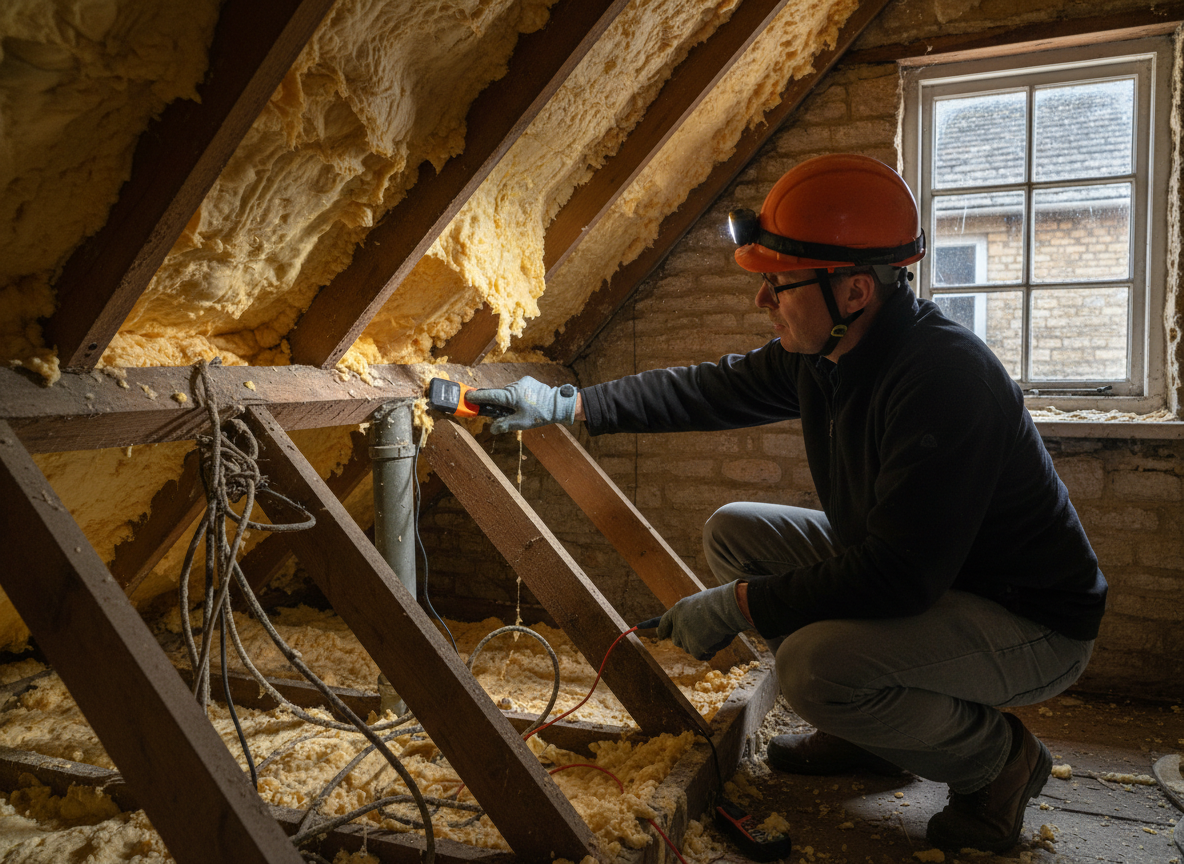
In older Gloucestershire homes, begin by determining the build era and foam type present, as Victorian and Edwardian terraces common in Cheltenham often contain closed-cell applications from the 2000s that bond tightly to timber joists and lathe.
Review Building Age and Construction Details
Cheltenham properties from the late 1800s through 1930s frequently feature solid brick walls and pitched roofs with limited access points. These details affect how spray foam adheres to rafters and whether removal risks damaging original plasterwork or ceiling structures. Walk the loft space to note joist spacing and any prior alterations that might hide foam layers. Document every visible section with photos before any work starts, as this record helps plan safe extraction around fragile elements. Older homes in areas like Montpellier and Lansdown show repeated patterns where foam fills gaps between original insulation remnants, requiring careful separation to avoid pulling down ceiling boards.
Assess Moisture and Ventilation Conditions
Wet winters in the Cheltenham area accelerate condensation issues behind spray foam layers, especially where roof tiles have shifted over decades. Check for staining on rafters, musty odors, or soft timber spots that indicate trapped water since foam can mask leaks until removal begins. Measure humidity levels in the loft during different times of day to spot ongoing ventilation shortfalls common in tightly sealed older builds. These readings guide whether additional drying time is needed post-removal to prevent rot in exposed wood. Homes near the Cotswold escarpment often face higher wind-driven rain exposure that worsens these hidden problems.
Examine Structural Impacts on Joists and Ceilings
Inspect every joist for bowing or nail pops caused by foam expansion over time, particularly in narrow terrace layouts found throughout central Cheltenham. Probe timber ends near external walls where ground moisture can rise through older foundations and interact with foam edges. Note any sagging ceiling sections that could worsen once the foam weight is removed. These checks prevent surprises during extraction and protect the original roof structure that many local properties rely on for stability. Properties along Montpellier Terrace show consistent patterns of foam applied directly over historic lathe, demanding slower removal techniques to limit vibration damage.
Factor in Local Weather and Seasonal Timing
Plan removal around periods of lower rainfall to allow full drying of exposed timbers before new insulation goes in. The Timing Spray Foam Removal Around Cheltenham's Wet Winters guide outlines how prolonged damp spells affect drying rates in Gloucestershire lofts. Schedule an insulation assessment first to map all affected zones and identify any cavity wall extensions that need separate handling. This step reveals whether open-cell or closed-cell foam dominates and which extraction approach fits the building without excess disruption to daily life in the home.
Verify Access Routes and Neighbor Considerations
Map safe entry points through the property, accounting for narrow hallways typical in Cheltenham terraces that limit equipment movement. Discuss boundary walls with adjacent owners early, as shared rooflines in areas like Charlton Kings can complicate debris removal. Confirm that all waste will be cleared from site the same day to avoid blocking pavements or gardens. These practical steps reduce delays once work starts and keep disruption contained within the footprint of the single property.