2026-10-23 ·
Timing Spray Foam Removal Around Cheltenham's Wet Winters
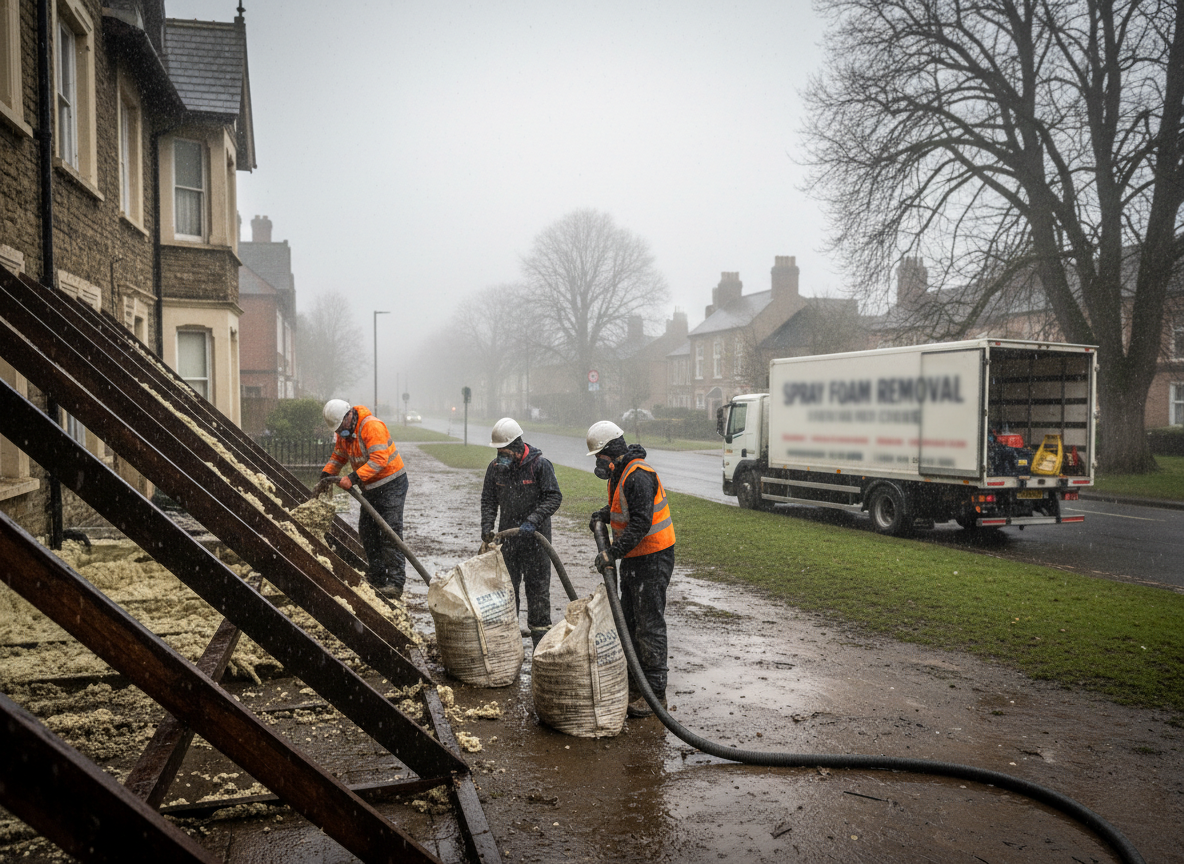
The optimal window for spray foam removal around Cheltenham falls between April and September, when drier conditions minimize moisture interference in lofts and attics during the region's characteristically wet winters. Persistent rainfall from November through February raises humidity levels that can slow material breakdown and increase the chance of hidden damp in roof spaces. Local operators see this pattern repeat across Montpellier, Pittville and surrounding streets where many Victorian and Edwardian homes retain original roof structures.
Cheltenham's Winter Rainfall Patterns
Gloucestershire receives steady winter rain that often exceeds 80 mm per month between December and February, saturating roof tiles and allowing water to find paths into lofts. This moisture lingers longer in older properties with limited ventilation, creating conditions where spray foam bonds more tightly to timber and plaster. Operators working near Tewkesbury and Bishop's Cleeve note that even brief dry spells in January rarely last long enough for safe, complete removal without follow-up drying time. Planning work outside these months reduces the need for extra dehumidification equipment and shortens overall project duration.
How Moisture Changes Removal Steps
Wet conditions force extra preparation steps such as pre-drying the space and protecting floorboards below the work area. Closed cell foam in particular traps water against rafters when humidity stays high, requiring longer dwell times for removal agents. In contrast, April and May weather allows crews to open roof vents and finish the job in fewer visits. Properties in Winchcombe and Cirencester often show different results based solely on the month the work begins, with winter starts needing additional inspections for hidden condensation afterward.
Recommended Scheduling Windows
Book assessments in late winter so removal can begin as soon as consistent dry days arrive. March offers a transition month where daytime temperatures rise enough to support drying yet before peak pollen and nesting season. September still provides workable weather before October rains return. Homeowners in Gloucester and Stroud who align projects with these windows report fewer callbacks related to residual moisture. 24/7 spray foam removal remains available year-round, but the same crew will advise shifting non-urgent jobs to the drier stretch.
Local Property and Terrain Factors
Many Cheltenham terraces sit on clay soils that hold winter water close to foundations, indirectly raising loft humidity through slower evaporation. Older homes in Evesham and Ledbury frequently combine this with slate roofs that shed water less efficiently once gutters overflow. Checking for these site conditions before work starts prevents surprises once the foam comes off. What to check before removing spray foam from older Gloucestershire homes outlines the specific checks that apply to local stock. Cost factors for spray foam removal in Cheltenham properties also shift with season because winter moisture adds drying labor.
Practical Next Steps for Homeowners
Contact a local team early in the year to lock in a slot once spring weather stabilizes. Review loft access and note any recent leaks so the crew can plan around them. Loft spray foam removal crews familiar with the area can often complete the work in two to three days when conditions stay dry. Aligning the schedule with these realities keeps the project on track without weather-related delays.