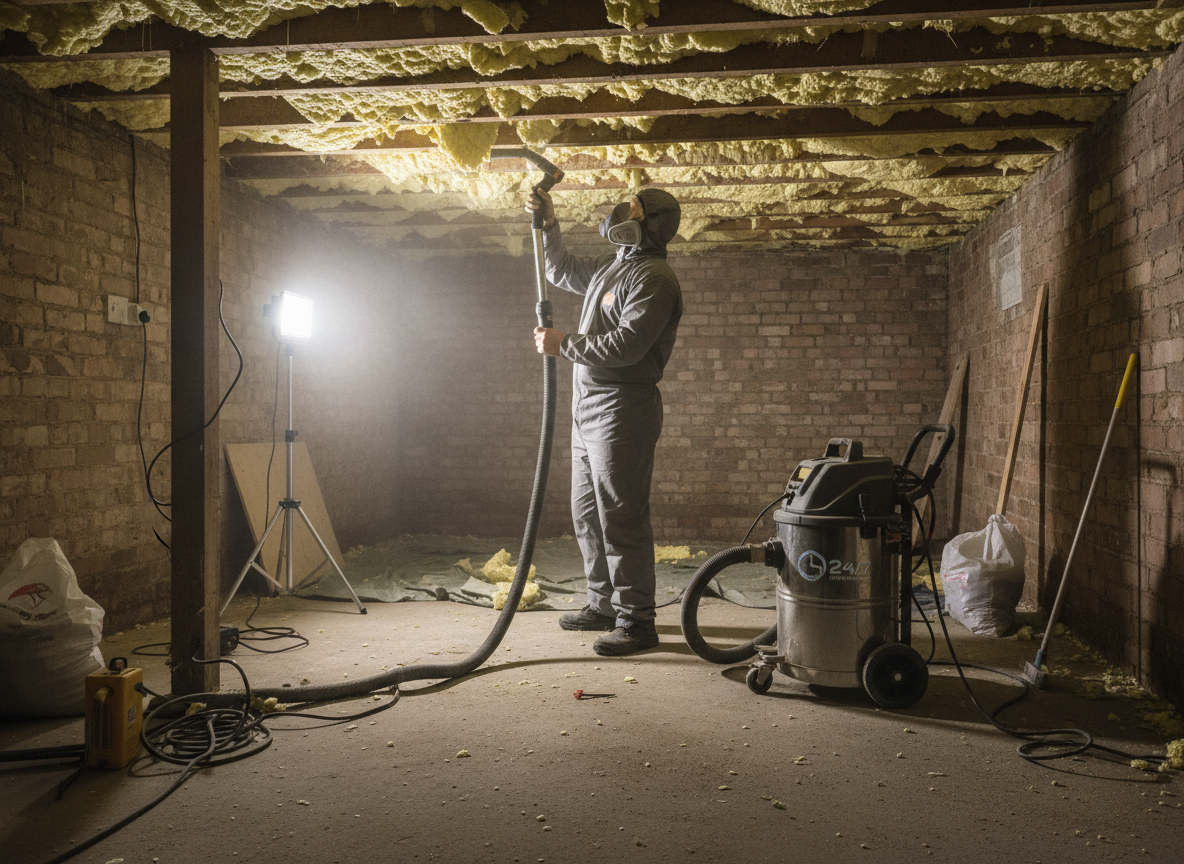
Cheltenham’s housing stock includes many mid-19th century terraces and Regency villas where spray foam was applied directly to rafters and joists in the 1990s and early 2000s. Over time the closed-cell material traps moisture against timber, especially during the area’s frequent winter rainfall when water finds its way under tiles on pitched roofs around Montpellier and Lansdown. Removing the foam requires careful sectional cutting and negative-air machines to stop dust migrating into finished rooms below, a step that becomes more involved when properties back onto the steeper slopes near Leckhampton.
Local building control officers now flag older foam installations during loft conversions because the material can mask roof leaks until rot appears in ceiling joists. In 24/7 call-outs we often find foam that has expanded into electrical chases or around chimney breasts in properties near the High Street and Pittville. Extraction must stop short of damaging original lath-and-plaster ceilings common in these buildings, and all waste is double-bagged on site before transport to the registered disposal facility at Bishops Cleeve.
Weather patterns in the Cheltenham area mean that even a short summer storm can drive water under ridge tiles, softening the bond between foam and timber. This changes the removal sequence: we first isolate the affected section, then use low-pressure scraping tools rather than aggressive chisels that could split rafters in older stock. Homeowners in the GL50 and GL51 postcodes frequently discover the problem only when they open the loft to install new insulation or solar panels, prompting urgent removal before further damp spreads.
Technician insight
In Cheltenham, the thing that catches most people out with 24/7 Spray Foam Removal is how quickly rain running down the valleys on Victorian terraces soaks the foam and bonds it to the rafters, especially in properties around Montpellier and Lansdown where gutters are often shared and hard to reach.
Damp Loft in a Lansdown Terrace
Homeowners noticed musty smells after heavy winter rain. We found closed-cell foam holding moisture against ceiling joists in their 1890s terrace. Sections were cut out under negative pressure, the timber dried, and the space left clear for new ventilation.
How it works
- 1
Site Assessment
We arrive within hours, inspect the loft space, check for hidden moisture, and map electrical and plumbing routes in Cheltenham terraces.
- 2
Containment Setup
Dust barriers, negative-air filtration and floor protection are installed to keep debris out of living areas below.
- 3
Foam Extraction
Foam is cut into manageable sections and removed without damaging rafters or original ceiling finishes common in local properties.
- 4
Clearance and Disposal
All material is bagged on site and taken to an approved Gloucestershire facility; the loft is vacuumed and left ready for inspection.
Pricing
Cost depends on loft size, foam depth and access difficulty; we provide an upfront quote after the initial inspection.