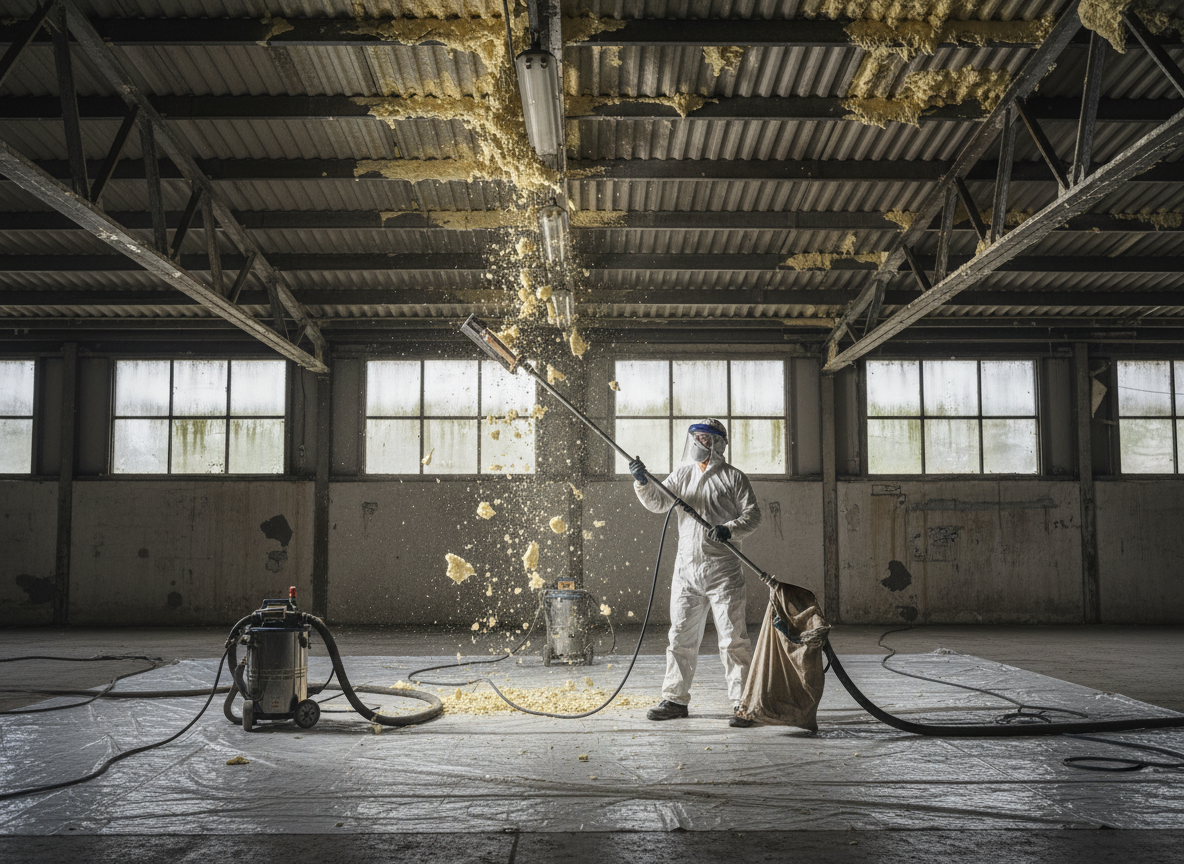
Warehouses in Cheltenham often feature large spans of corrugated metal roofing and block walls where spray foam was applied decades ago to improve thermal performance. Over time the foam degrades, traps moisture against the metal, and creates hidden corrosion that only appears once panels are disturbed. Removal crews must work at height with full containment to prevent insulation dust settling on stored goods or entering neighbouring units on shared industrial estates.
Local weather patterns add complexity. Frequent winter rain followed by mild spells means crews frequently encounter saturated foam that has absorbed water through failed roof joints. This increases weight and changes disposal requirements. Proper sequencing prevents water tracking along steel beams into electrical runs or down columns into ground-floor operations.
Edge cases include foam injected into cavity walls between offices and main storage bays. These sections demand careful cutting to avoid damaging hidden services while maintaining structural fire separation. Cheltenham planners sometimes require proof that removal methods meet current building regulations before any new insulation is installed.
Disposal routes matter in Gloucestershire. Foam waste must be taken to licensed facilities rather than general landfill, and larger warehouse jobs generate significant volumes that affect transport planning on narrow approach roads around the town.
Technician insight
In Cheltenham the thing that catches most people out with warehouse spray foam removal is older industrial buildings around the railway sidings where foam was sprayed directly onto corroded corrugated iron. Once you start pulling it the sheets flex and hidden rust flakes drop into stock below, turning a straightforward job into a full roof repair.
Warehouse Off Gloucester Road
Problem: failing foam on a storage facility roof causing condensation damage to goods. What we found: thick layers over rusted metal sheets with water trapped underneath. What we did: installed full containment, removed foam section by section, and cleared debris without halting operations. Outcome: clean substrate ready for new covering and no further moisture issues.
How it works
- 1
Site Assessment
Inspect warehouse structure, identify foam locations, test for moisture and asbestos, and map access points.
- 2
Containment Setup
Install dust barriers, negative air machines, and ground protection to isolate the work zone from stored inventory.
- 3
Foam Extraction
Use mechanical removal tools suited to metal and concrete substrates while maintaining safe working at height.
- 4
Cleanup And Verification
Remove all residue, HEPA vacuum surfaces, and confirm the space meets clearance standards before handover.
Pricing
Cost depends on warehouse size, foam thickness, access difficulty, and disposal volume. Upfront quotes provided after inspection.