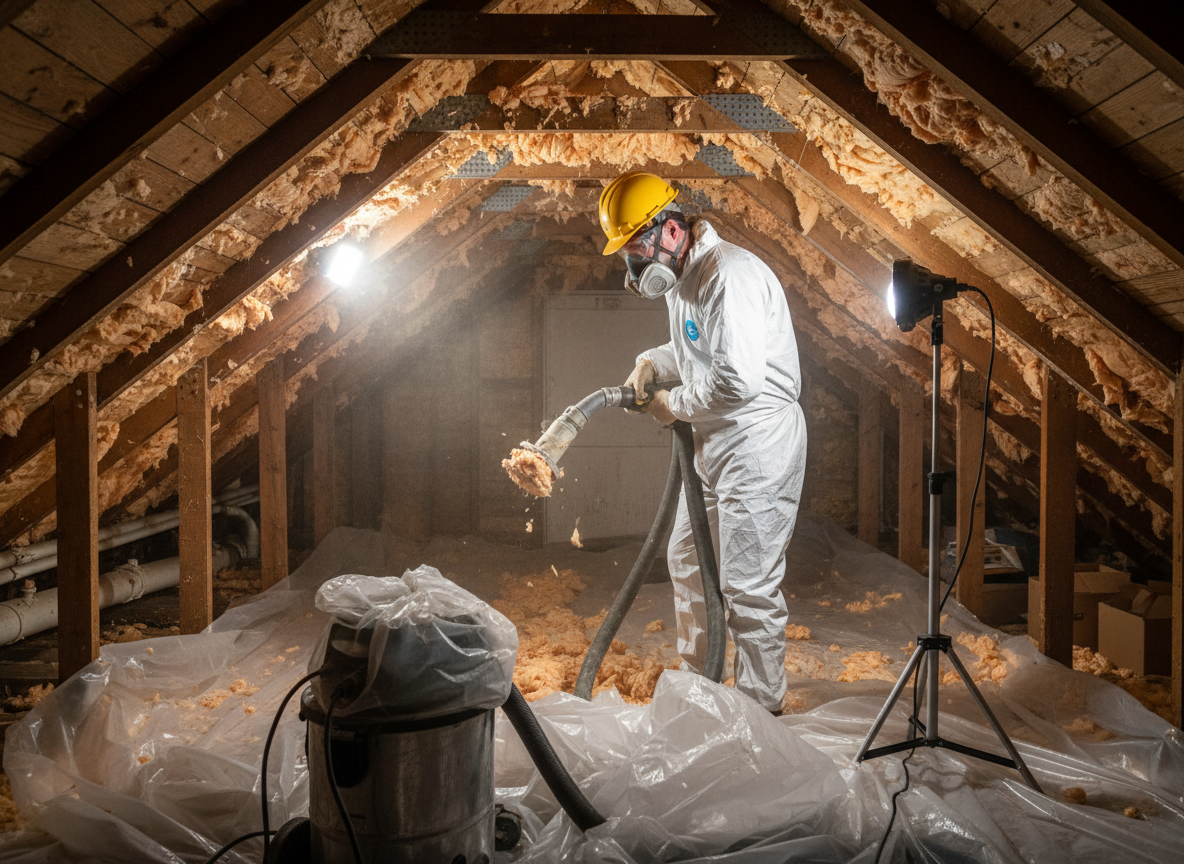
Attic spray foam in Cheltenham properties often bonds tightly to lath and plaster ceilings in Victorian terraces around Montpellier and Pittville. Removing it requires careful mechanical separation to avoid damaging original timber joists that have settled over decades. Moisture trapped beneath the foam can lead to hidden rot in these older roofs, especially where ventilation is limited by the compact rooflines common in GL50 postcodes.
Homeowners in Cheltenham frequently discover spray foam was applied over existing insulation without addressing roof leaks from the area's frequent winter rain. This creates hidden damp pockets that only appear once the foam is stripped. Proper removal includes inspecting for water ingress points along valleys and chimneys typical of local stone and brick construction.
Regulatory considerations in Gloucestershire mean any waste foam must be handled as construction debris rather than household waste. Crews working in tight attics around the town centre often face restricted access through narrow loft hatches in terraced homes, requiring sectional dismantling of the material rather than large-sheet extraction.
Seasonal timing matters in the Cheltenham area because summer work allows better ventilation during removal while winter jobs contend with colder attic spaces that make foam more brittle and prone to crumbling into dust.
Technician insight
In Cheltenham, the thing that catches most people out with attic spray foam removal is how the foam bonds to the original lath and plaster in Victorian terraces around Montpellier Terrace. Once winter temperatures drop, any trapped moisture turns to ice and expands, loosening the foam unevenly so it comes away in unpredictable chunks rather than clean sheets.
Hidden Damp in a Pittville Terrace Attic
A homeowner in a Pittville terrace noticed musty smells after heavy autumn rain. Inspection revealed spray foam covering a small roof leak along the valley. We removed the foam in sections, exposed the damp timber, dried the area, and advised on targeted repairs before any new insulation could be considered.
How it works
- 1
Initial Assessment
Inspect the attic space, identify foam type and depth, and check for moisture or structural issues in Cheltenham period properties.
- 2
Containment Setup
Seal the work area with sheeting to protect living spaces below from dust and debris during removal.
- 3
Foam Extraction
Use mechanical tools to separate and remove the spray foam in sections while preserving joists and roof structure.
- 4
Cleanup and Disposal
Vacuum residual particles, dispose of waste per local regulations, and leave the attic ready for new insulation if required.
Pricing
Pricing depends on attic size, foam thickness, and access difficulty in Cheltenham homes.